
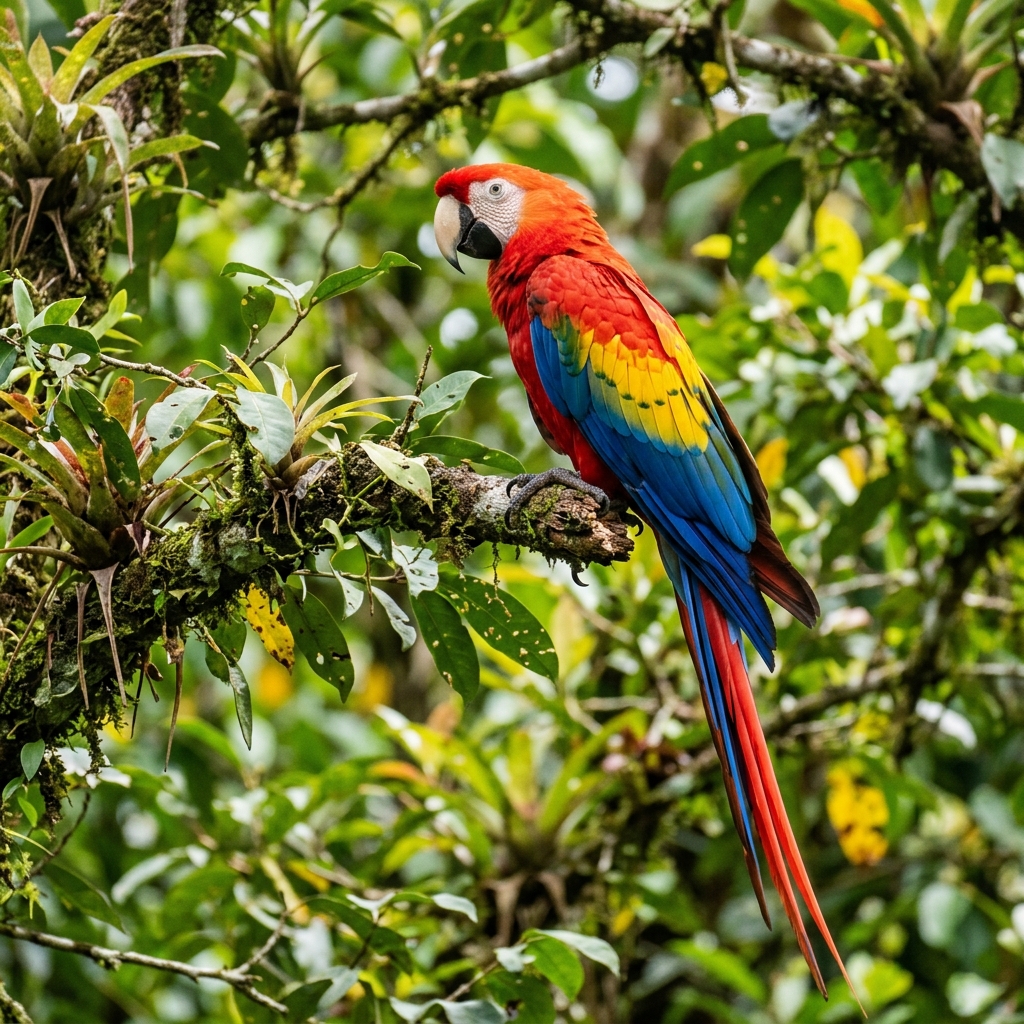
Deep in the Tambopata National Reserve lies one of the most stunning wildlife spectacles on the planet: the Macaw Clay Lick (Collpa de Guacamayos). This unique natural phenomenon draws visitors from all over the globe, eager to witness a chaotic, colorful, and noisy gathering of thousands of wild birds.
1. A Morning Ritual
Every morning, just as the sun begins to rise, the forest comes alive with the squawks and screeches of hundreds of brightly colored macaws, parrots, and parakeets. They converge on the exposed clay cliffs along the riverbanks, creating a breathtaking kaleidoscope of red, blue, green, and yellow feathers against the earthy tones of the cliff.
2. Why Do They Eat Clay?
Scientists believe that the birds ingest the mineral-rich clay to neutralize the toxins found in their diet of unripe seeds and fruits. The clay also provides vital sodium and minerals that are otherwise scarce in the western Amazon basin. This daily dietary supplement is crucial for their survival and health.
3. The Species You Will See
The most iconic visitors are the large Scarlet Macaws, Red-and-green Macaws, and Blue-and-yellow Macaws. However, the licks are also frequented by smaller parrot species, including the Mealy Parrot and the Dusky-headed Parakeet. The sheer diversity of species interacting in one place is truly a marvel of nature.
4. The Viewing Experience
To witness this spectacle, visitors typically wake up before dawn and take a short boat ride to a designated viewing blind or platform. Waiting quietly as the jungle wakes up builds anticipation. When the birds finally descend upon the clay, the sight and sound are overwhelming in the best possible way.
5. The Social Dynamics of Macaws
Beyond feeding, the clay licks serve as important social gathering places. Macaws are highly intelligent and social creatures. The lick provides a safe environment for them to interact, preen one another, and even find mates. Watching their complex social behaviors is just as fascinating as their vibrant plumage.
Tips for Visiting the Clay Lick
- Wake Up Early: The best activity happens just after dawn, so be prepared for an early start.
- Stay Hidden and Quiet: Macaws are very cautious. Sudden movements or loud noises can spook the entire flock away.
- Best Season: The dry season (August to October) usually sees the highest number of birds visiting the clay licks.
The Macaw Clay Lick in Tambopata is more than just a tourist attraction; it is a vital window into the intricate behaviors and dietary needs of Amazonian wildlife. Witnessing this colorful, chaotic gathering is a once-in-a-lifetime experience that embodies the vibrant spirit of the jungle.